

- Explore Our Quality Homes That Fit Your Budget

How to Choose the Right Floor Plan for Your New Home in Iowa — Before You Fall in Love with One
Most people pick a floor plan based on how it photographs. Then they move in and realize the garage is on the wrong side, the kitchen window faces the wrong direction, and the bedrooms are laid out for a family that isn’t theirs. Here’s how to avoid that.
The right floor plan is the one that matches how your family actually lives — not how you live in your current home, and not how a plan looks in a photo. Before you choose, you need to think about traffic flow, bedroom placement, Iowa’s climate realities, natural light based on your specific lot orientation, and what is genuinely expensive to change after construction begins vs. what isn’t.
Browse Happe Homes’ floor plans → and use this guide alongside them. A Happe advisor can also walk you through any plan in person.
We’ve helped hundreds of families choose a floor plan in Iowa, and we’ve seen the same pattern repeat: a family picks a plan because they love the master bathroom or the vaulted ceiling in the great room, and then six months after moving in, they realize the laundry room is on the wrong level, or there’s no mudroom entry from the garage, or their kids’ rooms are on the opposite side of the house from theirs.
None of these things are impossible to live with. But they’re all things you notice every single day, and they’re all things that a more deliberate floor plan evaluation process would have caught before you built.
This guide is the conversation we have with every family who walks through our door before they commit to a plan. It’s not about our specific floor plans, it’s about the framework for making this decision well, regardless of which builder or which plans you’re considering.
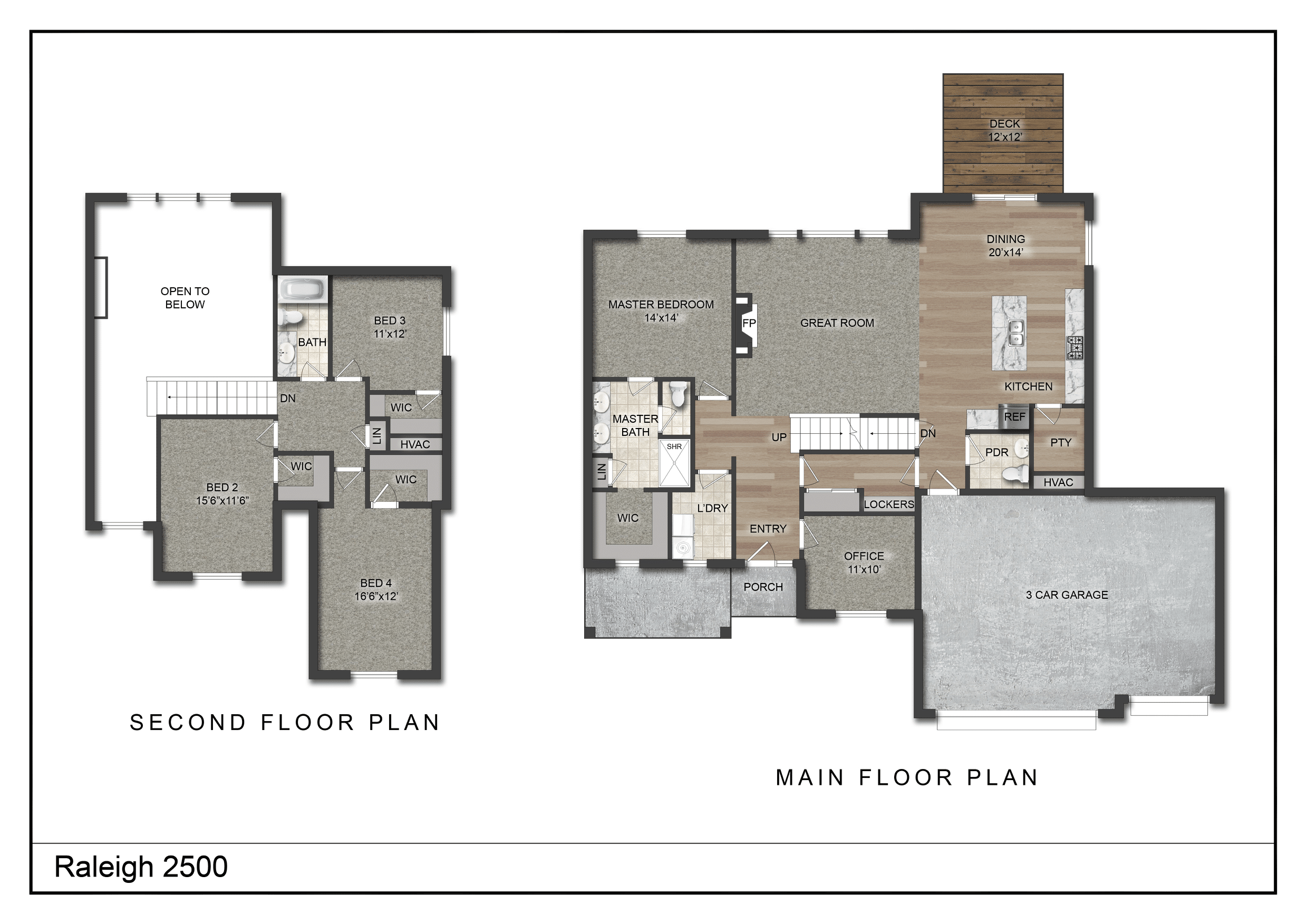
The most common mistake
Why "I'll Know It When I See It" Doesn't Work for Floor Plans
A floor plan is fundamentally different from choosing paint colors or countertop material. Paint can be changed for a few hundred dollars. A floor plan, specifically the load-bearing walls, the staircase location, the garage placement, the foundation footprint, is extremely expensive to change once construction begins, and impossible to change after.
The problem is that floor plans are almost universally presented in ways that make them hard to evaluate honestly. Renderings make rooms look larger and better-lit than they are. Staged model homes are loaded with furniture and accessories that distract from the layout itself. Square footage numbers tell you size but nothing about shape, flow, or how a space actually feels.
Walking a model home is useful but misleading. Model homes are professionally staged and lit to feel a certain way. The furniture is scaled small to make rooms feel large. Every closet is artfully organized. Every surface is clean. Before committing to a floor plan, try to walk a completed, unstaged home in the same plan, or at minimum, walk the model with all the furniture mentally removed and think about how your actual furniture and life would occupy the space.
The alternative is to think about your floor plan the way you’d think about a long-term relationship — not by how it presents on first impression, but by how it behaves in the ordinary Tuesday evening conditions of real life.
Iowa-specific factors
Four Things About Iowa Living That Should Shape Your Floor Plan
1. Garages are not optional — they're daily living infrastructure
In Iowa, you will use your attached garage every single day from November through March at minimum. Where the garage entry is located relative to the kitchen, mudroom, and laundry room matters enormously. The best layouts put the garage entry near the kitchen and a mudroom with storage, so coming in from the cold means stepping directly into a functional transition space, not tracking through the living room.
Iowa families with kids especially benefit from a mudroom drop zone between garage and kitchen: hooks, cubbies, a bench, space for boots and backpacks. If a floor plan doesn’t have this, or has the garage entry in an inconvenient location, that’s a real daily friction point worth taking seriously.
2. South-facing orientation matters more than in warmer climates
Iowa winters are long and cold. Natural light from the south makes a meaningful difference in how warm and welcoming a home feels during the months you spend the most time indoors. When you’re evaluating a floor plan, overlay it onto your lot orientation. Ideally, your primary living areas, kitchen, great room, dining, face south or southeast. A plan that works beautifully on one lot might feel dark and cold on a different lot facing a different direction.
Some Des Moines builders give you a binder with 12 tile options and call it a design consultation. Great builders have a proper design center and a dedicated designer who works with you over multiple sessions to make sure every selection reflects how you actually live.
Ask your builder to show you how a floor plan maps to your specific lot. This is one of the most underrated conversations in the whole process.
3. Basements are part of the liveable footprint, not storage overflow
Iowa homes traditionally include full basements, and most families eventually finish them. When evaluating a floor plan, think of the basement as a future level, not as storage. Where does the staircase land? Is the egress window location suitable for a bedroom? Is there a bathroom rough-in? A floor plan that positions the basement staircase in a good location (often off the great room or near a hallway rather than in the kitchen) makes finishing the basement feel cohesive rather than like an afterthought.
4. Outdoor living has a short season — but it's important
Iowa summers are genuinely beautiful, and outdoor entertaining happens in earnest from May through September. If outdoor living matters to you, think about where the deck or patio door is located relative to the kitchen. A kitchen that opens directly to a rear deck for easy outdoor entertaining is significantly more usable than one where you have to walk through a dining room to get there. Also consider sun exposure, a west-facing deck in Iowa’s July heat becomes unusable in the afternoon without shade.
4. Outdoor living has a short season — but it's important
Here’s the room-by-room framework we use when walking a floor plan with a family. For each space, the question to ask isn’t “do I like this room”, it’s “does this room work for the way we actually live.”
Where you’ll spend more time than any other room. Work triangle between sink, refrigerator, and range matters. Island orientation determines traffic flow. Where does the trash go?
Is it separated from kids’ rooms for noise reasons, or near them for young-child practicality? Iowa climate: bedroom on south side for morning sun vs. north for cooler sleeping temperatures, depends on your preference.
10’×12′ sounds fine until you put a full bed, dresser, desk, and closet in it. Standard bedroom furniture requires more room than paper suggests. Closet placement determines furniture arrangement.
Post-2020, most families need at least one dedicated workspace. A true home office needs a door (for calls), adequate light, and a wall for a monitor. A flex room without a door isn’t a real office.
Critical in Iowa. You want hooks, storage, a bench for boot removal, and proximity to the kitchen. The number of hooks needed = everyone in the household times two (coat + bag minimum). Does this work for your family size?
In Iowa, laundry on the same level as bedrooms saves thousands of steps per year. Upper floor laundry is considered a premium feature. If laundry is in the basement, think hard about how often you’ll carry clothes down and up.
Total storage square footage is rarely listed on floor plans. Count closets carefully. Linen closets, coat closets, and pantry space are the first things to disappear in value-engineering. Where are the holiday decorations going?
Ranch vs. Two-Story — An Honest Iowa Comparison
This is the question we get asked more than any other floor plan question. There’s no universal right answer, but there are clearer answers for specific family situations.
| Factor | Ranch (single-story) | Two-story |
|---|---|---|
| Lot requirement | Larger footprint needed — best on wider lots | More efficient footprint — fits narrower lots well |
| Sq ft per dollar | Generally costs more per sq ft (more foundation, more roof) | Generally more efficient — two floors share foundation + roof |
| Iowa heating/cooling | Easier to heat/cool — one zone, no heat stratification | Upper floors warmer in summer, harder to balance |
| Aging in place | Best option — no stairs, primary suite on main level | Problematic long-term without elevator or main-floor primary |
| Young families | Good — everyone on same level, easy supervision | Can be ideal — primary suite separated from kids’ rooms (noise) |
| Teenagers/privacy | Less natural separation between generations | Better separation — upstairs = kid space vs. main floor = adult space |
| Resale appeal Iowa | Strong — high demand from buyers 50+, accessibility-focused | Strong — appeals to young families wanting more sq ft efficiently |
Ranch homes are in growing demand in Iowa’s market as the buyer pool ages. If you’re planning to stay in this home for 20+ years, a ranch with a main-floor primary suite gives you more flexibility than any two-story plan. If you have school-age kids and are building in the 5–15 year horizon, a two-story often gives you more liveable space per dollar. Both sell well in Ankeny, Johnston, and Des Moines — neither penalizes you at resale. See both types in Happe’s floor plan library →
What's Expensive to Change After Construction Begins — and What Isn't
One of the most useful frameworks for floor plan evaluation is understanding which decisions lock in once construction starts, and which ones you can still adjust or reconsider even after you move in.
What happens if costs exceed the estimate? Get a clear answer on how change orders are handled, what your options are if a material is unavailable, and what built-in protection you have against unexpected cost increases.
Essentially impossible or very expensive to change later
Load-bearing wall locations.These define the structural skeleton of your home. Moving them requires engineering, permits, and significant structural work.
Staircase position. Where the staircase goes determines traffic flow on both levels. Relocating it is a major structural change.
Foundation footprint and basement layout.Once the foundation is poured, the basic footprint is set. Egress window locations are expensive to change post-pour.
Garage orientation and placement. Is the garage on the left or right? Facing the street or the side? These are foundation decisions.
Ceiling heights (structural).
Standard 9-foot ceilings vs. vaulted vs. 10-foot tray ceilings are framing decisions that affect the entire structure above
Plumbing stack locations. Bathrooms and laundry rooms need to stack or be near each other. Moving a wet wall is a major renovation.
Non-load-bearing partition walls. Adding or removing interior walls that don’t carry structural load is relatively affordable renovation work.
Kitchen cabinet layout and appliance positions(within existing plumbing rough-in locations, moving the rough-in is harder).
All finishes.Countertops, flooring, paint, tile, fixtures, everything visual and tactile can be changed without structural implications.
Closet organization systems.Built-ins, organizers, and shelving can all be added or changed after move-in.
Lighting and electrical. Adding fixtures, outlets, and dimmer switches is accessible renovation work, especially during construction when walls are open.
Basement finishing. If rough plumbing is already in, finishing a basement is a future project, not a now-or-never decision.
Spend your scrutiny on the structural and plumbing decisions. Be relaxed about the finish decisions. Many buyers agonize over countertop colors and under-evaluate garage placement. Countertops can be replaced in a weekend. The garage does not move. Get the bones right and the rest can be adjusted over time.
Matching plan to family
Which Floor Plan Type Fits Your Family's Life Stage
Young family with kids under 10
- Open kitchen-to-living sightlines
- Bedrooms clustered together
- Mudroom with storage capacity
- Main-floor laundry
- Fenced yard access from kitchen
- Primary suite separated from kids’ floor
- Bonus room or flex space upstairs
- Second living area for separation
- Home office with a door
- Finished or finishable basement
- Dedicated home office with a door
- Two offices if both work from home
- Quiet zone away from main traffic
- Strong internet infrastructure plan
- Guest suite for clients or family.
- Ranch — everything on one level
- Wide doorways (36″ ADA-friendly)
- Walk-in shower, no tub barrier
- No-step garage entry
- Proximity to healthcare, amenities
- Open great room connecting to kitchen
- Island with seating for 4+
- Rear deck accessible from kitchen
- Powder room near main living area
- Finished basement with bar potential
- Secondary suite on main level
- Separate entrance if possible
- Two laundry areas or connections
- Sound separation between wings
- Accessible bathroom on main floor
How Happe Homes Helps You Find the Right Plan — and What We Can Modify
We approach floor plan selection as a conversation, not a catalog browse. Before we show you plans, we ask you about your life: how you move through your current home, what frustrates you about it, what you’d never give up, what a typical school-morning and dinner-time look like. The answers usually reveal more than a checklist.
Our floor plan library
Happe’s floor plan library includes proven designs we’ve built multiple times in Iowa conditions — plans that work with Iowa’s climate, lot types, and family culture. Each has been refined through real buyer feedback. We know which plans’ master bathrooms feel too small once clients move in, and which ones consistently surprise families with how well they work. Browse the full library →
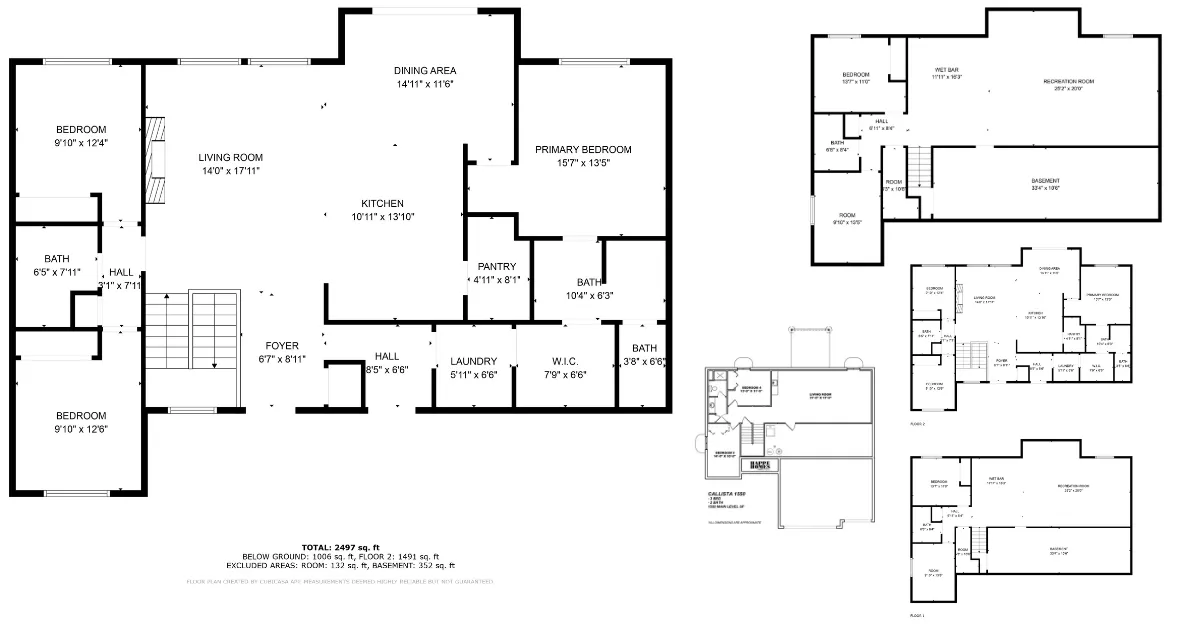
What we can modify
Unlike production builders with locked plans, Happe can modify our floor plans meaningfully. Families regularly ask us to:
- Expand or reconfigure the primary suite layout
- Add a third-car bay or side-load garage orientation
- Move the laundry room from lower to upper level
- Extend the kitchen island or add a butler’s pantry
- Add a bedroom to a three-bedroom plan or combine two smaller rooms
- Adjust window placement for better natural light on specific lot orientations
- Add a dedicated home office where a flex room was planned
Structural changes (load-bearing walls, foundation footprint, staircase relocation) require engineering review and affect cost. Non-structural changes are typically more straightforward. The earlier in the process you raise a modification, the less it costs and disrupts.
Download a plan you like from happehomes.com/floor-plans, print it at scale, and tape it to your floor in your current home. It sounds low-tech, but physically walking a floor plan at full scale tells you things a rendering never will. Then bring it to your Happe appointment and walk through every room with us. We’ll tell you honestly what works, what doesn’t, and what we’d suggest changing for your specific situation.
Questions Families Ask Us About Floor Plans

Absolutely. We happily collaborate with outside architects and designers to bring their plans to life. We can also provide complete design-build services if you prefer a streamlined approach.
The garage entry and mudroom. In Iowa’s climate, you enter your home through the garage door every day from November through March. Where that entry lands relative to the kitchen, laundry room, and main traffic flow shapes the quality of your daily life more than almost any other floor plan feature. A plan with a beautiful great room and a poor garage entry location is a plan that will frustrate you every winter morning. It’s the thing our experienced buyers always mention first in hindsight.
More than most buyers realize. The same floor plan on a south-facing lot vs. a north-facing lot delivers very different daily light and temperature experiences. Ideally, your main living areas (kitchen, great room) face south or southeast for natural winter light. Bedrooms facing east get morning sun. Rear decks facing west get afternoon summer sun — which can make them uncomfortably hot in Iowa summers. Ask your Happe advisor to map any plan you’re considering onto your specific lot orientation before you finalize the decision. See available lots across Happe communities →
Open concept plans — where kitchen, dining, and living flow together without walls — are popular for good reasons: they feel spacious, facilitate supervision of kids, and work well for entertaining. But they have real trade-offs. Sound travels everywhere. Kitchen smells and mess are always visible from the main living area. There’s no separate “away” space for noise-sensitive activities like reading or studying. For families with teenagers, a plan that has some separation between zones often works better than full open concept. Neither is universally right — it depends on your household’s personality and habits.